 learnfinancewith
The platform
How it works
One simulated economy, running continuously across thirteen grades, with the classroom tools built around it.
A simulation, not a set of worksheets
Every student has an account, a job, bills that come due, and a ledger. The simulation advances on a school calendar. Interest compounds, paychecks arrive with deductions taken out, and bills land whether or not anyone is paying attention.
It is deterministic. The same class, on the same day, produces the same world — which is what makes a teacher able to plan a lesson around what is about to happen, and what makes a demonstration in front of a school board show the engine actually running rather than a recording of it.
Nothing in it is real. The currency is deliberately not dollars, every figure carries a visible simulated marker, and the platform connects to no bank and issues no card. That is a permanent design constraint, not a stage we are at.
The same world at every grade, seen differently
A second grader sees two numbers and one decision. A senior sees a transaction register, a mastery breakdown by strand, and a loan with a term longer than they have been alive.
It is the same economy underneath. The interface, the reading level, the number of choices on screen and the size of the tap targets all shift with the grade band — so a student is never handed a screen designed for someone six years older, and never handed a screen they have outgrown.
Because the world is continuous, a student who joins in fourth grade and leaves in twelfth has one financial history rather than nine disconnected units.
What the teacher gets
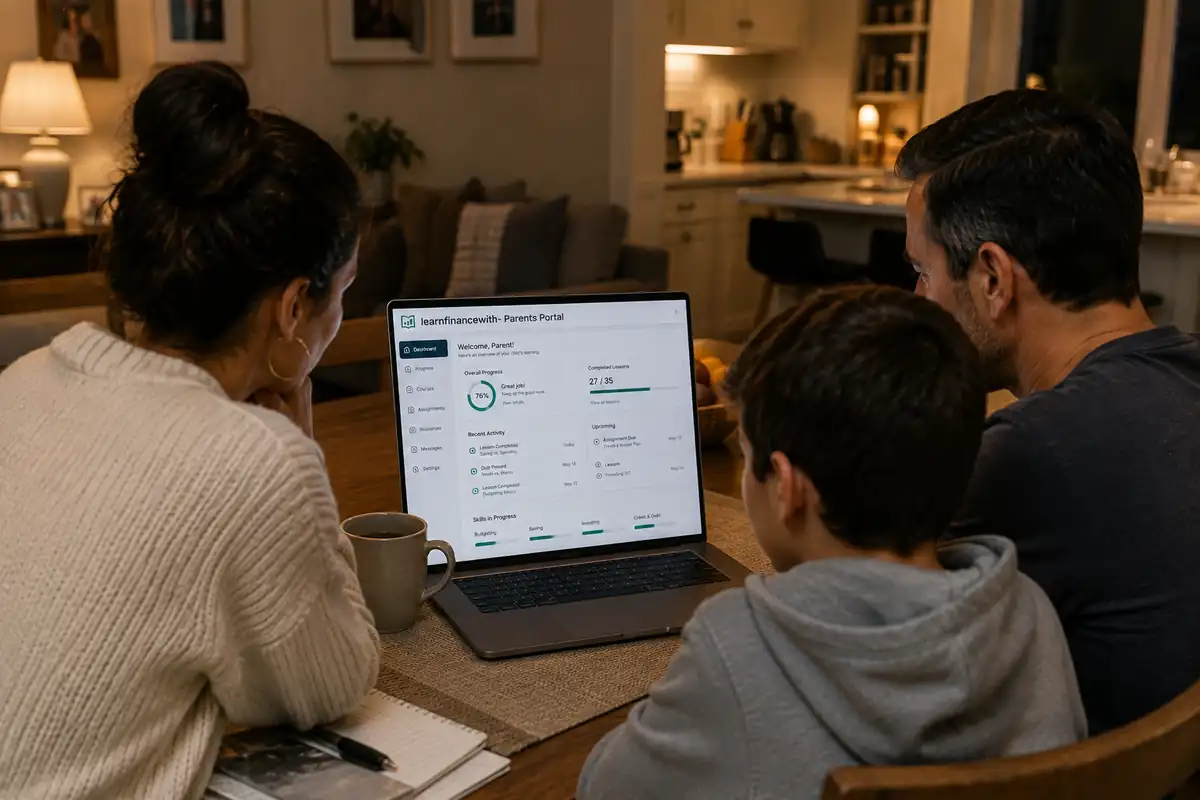
A screen that opens with who needs them right now, by name, and what to do about it. A live view of who is working and who is stuck — which are different problems needing different responses, and are labelled differently for that reason.
Control of the simulation: a teacher can fire a life event at the class the week after the emergency-fund lesson, so the lesson and the situation it describes arrive together. Every intervention is recorded with who did it and why, because a parent asking why their child’s simulation lost money is entitled to an answer.
A gradebook that reads evidence from the simulation itself, not only from quiz answers — because what a student does with money is better evidence than what they can say about it.
Assessment and the credit pathway
Assessments are proctored in the classroom, marked server-side, and aligned to standards. The syllabus, the coverage report and the transcript are generated from the course itself rather than written by hand, so they cannot drift from what is actually taught.
Designed for articulation and dual-enrollment partnerships. This course is designed to support articulation and dual-enrollment agreements. College credit is awarded solely by the partnering institution, at its discretion, under its own policies. Completing this course does not by itself grant college credit.
What that means in practice: the artifacts a registrar asks for exist, in the shape they expect them, and the decision is theirs.